Dear Participants of BERMUN 2026,
We are all caught in the same storm, navigating the rising and crashing waves of climate change. However, while some cruise on in their yachts, others are left to drown in their rubber dinghies. In Berlin, summers are getting warmer. In Los Angeles, U.S., people are rebuilding after their houses were destroyed by wildfires. In Port-au-Prince, Haiti, natural disasters like hurricanes are not only increasing in intensity, but the citizens, afflicted by income inequality, violence, and food insecurity, cannot rebuild to be resilient to rising sea levels. The unequal and unjust differences between these cities are encapsulated in the term climate inequality, which is the unequal impact and cost of climate change across countries, regions, and communities.
The UN aims to combat climate inequality through resilient and sustainable development. Resilience is the ability to withstand and adapt to climate change. The United Nations Sustainable Development Goals (SDGs) provide us with a framework for “sustainability”: the responsible management and use of natural resources so they remain viable for future generations. In practice, this means designing binding emissions targets and climate protection legislation, pushing countries and economies towards renewable and sustainable energy alternatives.
Nonetheless, governments often prioritize economic stability over meaningful climate action, social equity, and climate justice. In addition, the less power parties have in decision-making, the greater the disproportionate impacts they suffer. Those hurt the most, like the rural poor, minorities, and indigenous communities, have the least leverage on institutional levels, creating a cycle of oppression. Historically, the development of the West during industrialization would not have been possible without extensive environmental harm and exploitation. Power imbalances persist because LEDCs, which lack infrastructure, experience, and seed capital, struggle to develop under the current circumstances, let alone under strict, non-inclusive environmental regulations.
These issues raise questions, among others, such as: Can economic growth and sustainability go hand in hand? Do we need to rethink our goals and ideas of success? Alas, we do not live in a utopia where long-term development is an appealing option for leaders and governments subject to winning high-stakes elections or carrying out their autocratic whims. Even when setting aside issues such as corruption and corporate lobbying, we must remember the fact that long-term solutions will not save today’s most vulnerable and poor populations. Simply investing in the future with little regard for the present, which some argue should be the main priority, continues to ignore the most vulnerable who are already feeling the effects of climate change now.
With regional diversity and future uncertainties, there is no universally defined path forward when discussing a sustainable world. Instead, there is a balance needed in which we build resilience to current climate disasters and aid the people affected, while preventing tomorrow’s by building long-term sustainable infrastructure and systems.
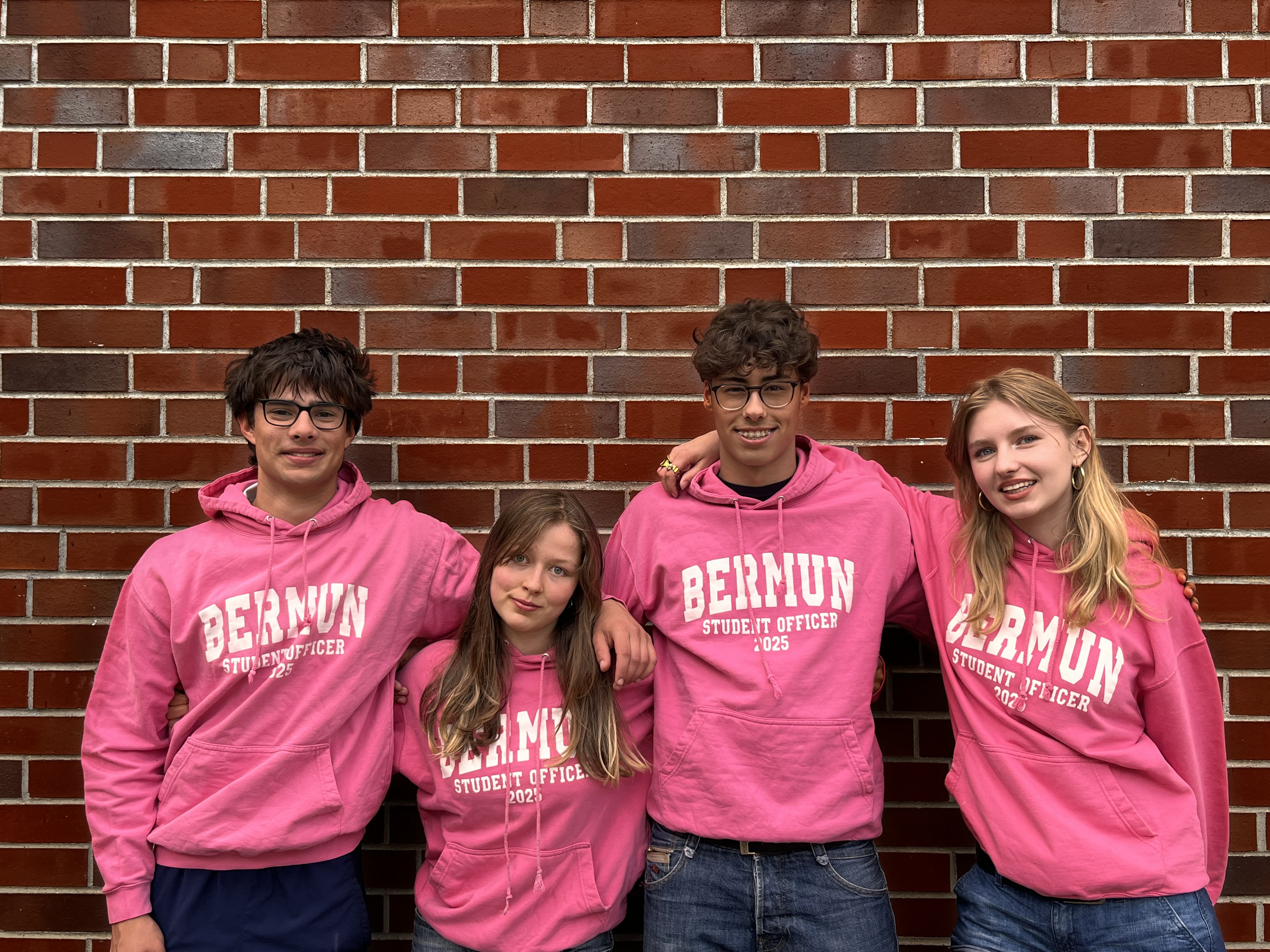
Photo: left to right: Barry, Frida, Julian, Susannah
Julian Faulk, Secretary-General
Frida Katzenstein, President of the General Assembl
Susannah Skinner, Deputy Secretary-General
Barry Tabachnikoff, Deputy Secretary-General